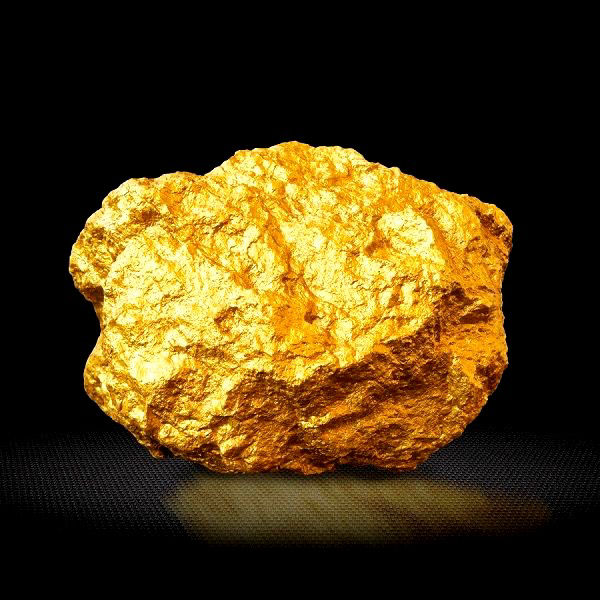
What is Gold and How is It Formed? History of Gold
Gold is Stardust. Gold a soft metal that doesn't decompose chemically due to its weak electropositive properties. Gold forms in the nuclei of chemical elements from the explosions of massive stars (supernovas) and neutron star collisions. Gold is as old as the universe itself. Astrophysical models have shown that gold is found in the dust of galaxies and the solar system, and that even a single neutron star collision could produce gold up to 13 times the mass of Earth. New research suggests that binary neutron stars are a possible cosmic source of the gold, platinum, and other heavy metals we see today. Gold is valuable because its reserves on Earth are limited. Gold is abundant throughout the universe. Destroying nature, forests, and habitats for the sake of pure gold is fanaticism! Gold is derived from the Latin word "aurum," and its symbol is "Au." Aurum derives from "aurora," the name of the Roman goddess of the dawn. Because gold is the weakest electropositive metal, its chemical activity is very low, allowing it to persist naturally for millions of years without deteriorating or rusting. Gold is a metal whose decay is the same as its formation. There are 202,000 tons of gold above ground and 53,000 tons underground. The countries with the world's richest gold reserves are Australia, South Africa, and Russia. The cost of extracting 1 ounce (31 grams) of gold is approximately $400–$450. However, the value of the habitats destroyed to achieve this goal is invaluable. >> The source of gold is space | >> proof publication
The world's oldest gold artifacts were found in Bulgaria, dating back to 4600 BC. The oldest gold artifacts were found in a >> tomb on the shores of Lake Varna. The Sumerians produced and used gold jewelry in complex and diverse styles dating back to 3000 BC. Similarly, the Lydians >> Lydians produced and used the world's oldest >> gold coin as money around 610 BC.
Let's Not Destroy Ourselves for Gold
For 3,000 years, gold has been a symbol of labor, accumulation, wealth, trade, and heritage. The legacy we can leave to future generations is not gold itself. The only legacy we can leave is a principle of life that protects nature, wildlife, and the world, respecting all living things. Gold should not be used for individual savings, but for exchange between states and the balanced management of the global economy. There is not enough gold in the world for anyone; even a single owner would be unhappy. To protect nature, stopping individual gold savings, using gold as a measure of value in circulation, and urgently developing digital and crypto solutions for gold are essential for the continuation of life. We hope this reality is recognized before it's too late. Individual gold mining, which doesn't use separation methods, should be considered the only viable method. Gold is abundant in the universe but limited on Earth. As has been proven, gold is formed by supernova collisions. That's why it shines like a star. It doesn't rust for thousands of years. In an age where gold is sought in space, it is a mistake to destroy nature, forests, wildlife, and our clean water resources for the sake of pure gold. Nature is the true wealth and must be protected. Otherwise, there will be no generation left to inherit the gold! Savage industrial fanatics determined to extract more gold know this all too well, yet they continue to destroy it. This is a common occurrence in humanity. Gold is not a consumer good, and certainly not bread. It is a measure of value and has been used as such throughout history. Will those who fail to learn from history ever grasp scientific truth? We doubt it!